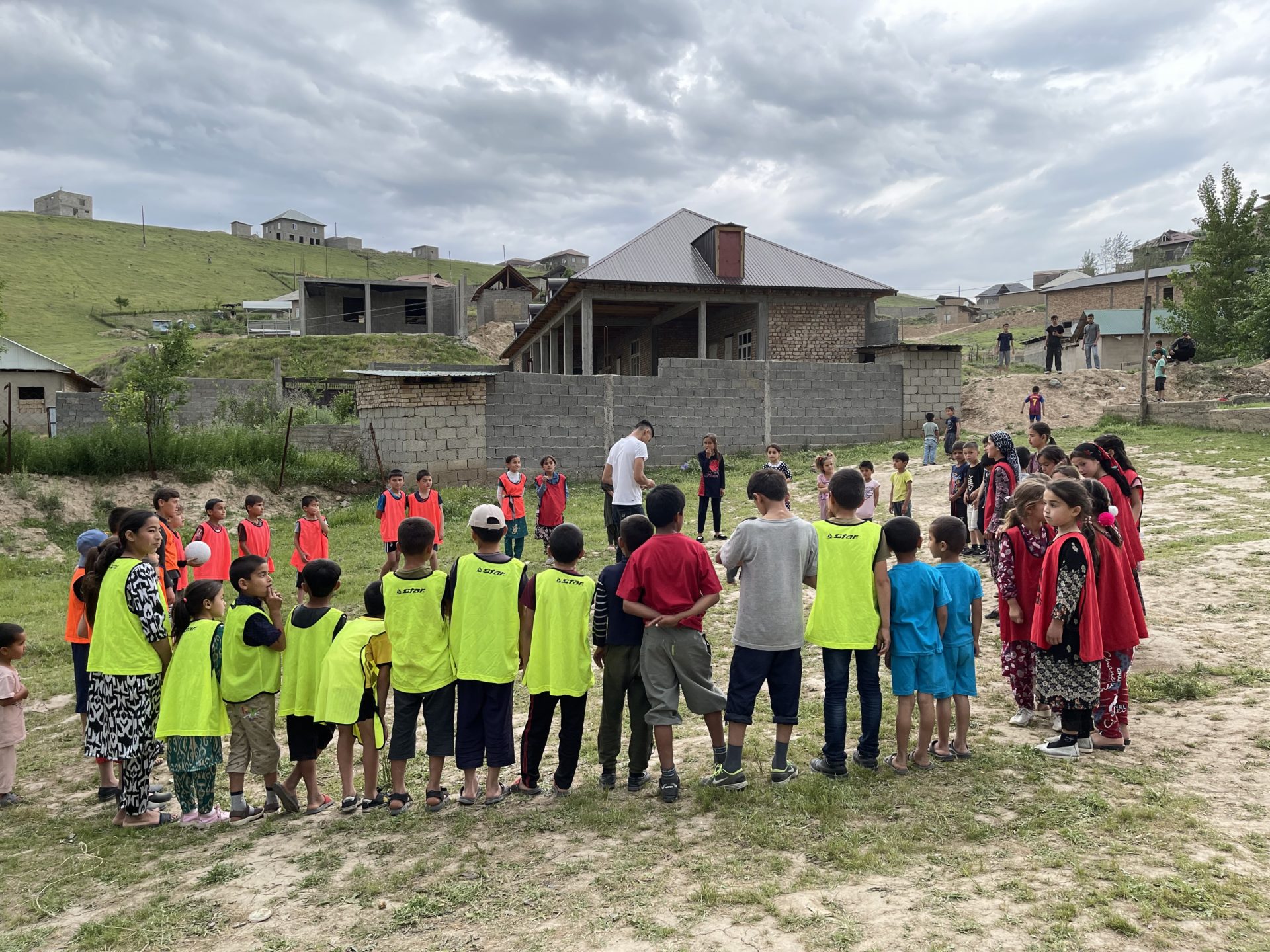
About Tajikistan
Tajikistan

Introduction
The Tajik people came under Russian rule in the 1860s and 1870s, but Russia's hold on Central Asia weakened following the Revolution of 1917. Bolshevik control of the area was fiercely contested and not fully reestablished until 1925. Much of present-day Sughd province was transferred from the Uzbek SSR to the newly formed Tajik SSR in 1929. Ethnic Uzbeks form a substantial minority in Sughd province. Tajikistan became independent in 1991 following the breakup of the Soviet Union, and experienced a civil war between regional factions from 1992-97. There have been no major security incidents in recent years, although the country remains the poorest in the former Soviet sphere. Attention by the international community since the beginning of the NATO intervention in Afghanistan has brought increased economic development and security assistance, which could create jobs and strengthen stability in the long term. Tajikistan is in the early stages of seeking World Trade Organization membership and has joined NATO's Partnership for Peace.
Geography
Location
Location: Central Asia, west of China
Geographic Coordinates: 39 00 N, 71 00 E
Area
Total Area: 143,100 sq km Rank: 95
Land Area: 141,510 sq km
Water Area: 2,590 sq km
Comparison: slightly smaller than Wisconsin
Land Boundaries: 3,651 km
Bordering Countries: Afghanistan 1,206 km, China 414 km, Kyrgyzstan 870 km, Uzbekistan 1,161 km
Coastline: 0 km (landlocked)
Climate
midlatitude continental, hot summers, mild winters; semiarid to polar in Pamir Mountains
Terrain
Pamir and Alay Mountains dominate landscape; western Fergana Valley in north, Kofarnihon and Vakhsh Valleys in southwest
Elevations
Lowest Point: Syr Darya (Sirdaryo) 300 m
Highest Point: Qullai Ismoili Somoni 7,495 m
Natural Resources
hydropower, some petroleum, uranium, mercury, brown coal, lead, zinc, antimony, tungsten, silver, gold
Land Use
Arable land: 6.52%
Permanent Crops: 0.89%
Other: 92.59% (2005)
Irrigated Land: 7,220 sq km (2003)
Renewable Water Resources: 99.7 cu km (1997)
Total Freshwater withdrawal (domestic/industrial/agricultural): 11.96 cu km/yr (4%/5%/92%)
Freshwater Withdrawal Per Capita: 1,837 cu m/yr (2000)
Environment
Natural Hazards: earthquakes; floods
Environmental Issues: inadequate sanitation facilities; increasing levels of soil salinity; industrial pollution; excessive pesticides
Environmental Agreements: Party to: Biodiversity, Climate Change, Climate Change-Kyoto Protocol, Desertification, Environmental Modification, Ozone Layer Protection, Wetlands
Geography Notes
landlocked; mountainous region dominated by the Trans-Alay Range in the north and the Pamirs in the southeast; highest point, Qullai Ismoili Somoni (formerly Communism Peak), was the tallest mountain in the former USSR
People
Population: 7,349,145 (July 2010 est.) Rank: 96
Age Structure
0-14 years: 34.3% (male 1,282,681/female 1,238,607)
15-64 years: 62.1% (male 2,260,552/female 2,303,034)
65 years and over: 3.6% (male 112,334/female 151,937) (2010 est.)
Median Age: 21.7 years
Population Growth
Growth Rate: 1.878% (2010 est.) Rank: 67
Birth Rate: 26.9 births/1,000 population (2010 est.) Rank: 60
Death Rate: 6.83 deaths/1,000 population (July 2010 est.) Rank: 138
Net Migration Rate: -1.28 migrant(s)/1,000 population (2010 est.) Rank: 124
Urbanization
Urban Population: 26% of total population (2008)
Rate of Urbanization: 1.6% annual rate of change (2005-10 est.)
Life and Death
Infant Mortality Rate: 41.03 deaths/1,000 live births Rank: 66
Life Expectancy at Birth: 65.33 years Rank: 166
Fertility Rate: 2.94 children born/woman (2010 est.) Rank: 74
Health and Disease
HIV/AIDS - Adult Prevalence Rate: less than 0.3% (2007 est.) Rank: 87
People living with HIV/AIDS: 10,000 (2007 est.) Rank: 103
HIV/AIDS Deaths: fewer than 500 (2007 est.) Rank: 91
Degree of Risk for Major Infectious Diseases: high
Food or waterborne diseases: bacterial diarrhea, hepatitis A, and typhoid fever
Vectorborne disease: malaria (2009)
Nationality and Culture
Noun: Tajikistani(s)
Adjective: Tajikistani
Ethnic Groups: Tajik 79.9%, Uzbek 15.3%, Russian 1.1%, Kyrgyz 1.1%, other 2.6% (2000 census)
Religion: Sunni Muslim 85%, Shia Muslim 5%, other 10% (2003 est.)
Languages: Tajik (official), Russian widely used in government and business
Education
Literacy (Meaning, age 15 and over can read and write): 99.5% Male: 99.7% Female: 99.2% (2000 census)
School life expectancy (primary to tertiary education): 11 years Male: 12 years Female: 10 years (2006)
Education expenditures: 3.4% of GDP (2006) Rank: 133
Government
Country Name
Conventional Long Form: Republic of Tajikistan
Conventional Short Form: Tajikistan
Local Long Form: Jumhurii Tojikiston
Local Short Form: Tojikiston
Formerly: Tajik Soviet Socialist Republic
Government Type: republic
Capital: Dushanbe Geographic Coordinates: 38 35 N, 68 48 E
Administrative Divisions
2 provinces (viloyatho, singular - viloyat) and 1 autonomous province* (viloyati mukhtor); Viloyati Khatlon (Qurghonteppa), Viloyati Mukhtori Kuhistoni Badakhshon* [Gorno-Badakhshan] (Khorugh), Viloyati Sughd (Khujand)
Note: the administrative center name follows in parentheses
Independence: 9 September 1991 (from the Soviet Union)
National holiday: Independence Day (or National Day), 9 September (1991)
Constitution: 6 November 1994
Legal system: based on civil law system; no judicial review of legislative acts; has not accepted compulsory ICJ jurisdiction
Suffrage: 18 years of age; universal
Executive Branch
Chief of State: President Emomali RAHMON (since 6 November 1994; head of state and Supreme Assembly chairman since 19 November 1992)
Head of Government: Prime Minister Oqil OQILOV (since 20 January 1999)
Cabinet: Council of Ministers appointed by the president, approved by the Supreme Assembly
Elections: president elected by popular vote for a seven-year term (eligible for a second term); election last held on 6 November 2006 (next to be held in November 2013); prime minister appointed by the president
Election Results: Emomali RAHMON reelected president; percent of vote - Emomali RAHMON 79.3%, Olimjon BOBOEV 6.2%, other 14.5%
Legislative Branch
bicameral Supreme Assembly or Majlisi Oli consists of the National Assembly (upper chamber) or Majlisi Milliy (34 seats; 25 members selected by local deputies, 8 appointed by the president; 1 seat reserved for the former president; members serve five-year terms) and the Assembly of Representatives (lower chamber) or Majlisi Namoyandagon (63 seats; members elected by popular vote to serve five-year terms)
Elections: National Assembly - last held on 28 February 2010 (next to be held in February 2015); Assembly of Representatives - last held on 28 February 2010 (next to be held in February 2015)
Election Results: National Assembly - percent of vote by party - NA; seats by party - NA; Assembly of Representatives - percent of vote by party - PDPT 71%, Islamic Revival Party 8.2%, CPT 7%, APT 5.1%, PER 5.1%, other 3.6%; seats by party - PDPT 55, Islamic Revival Party 2, CPT 2, APT 2, PER 2
Judicial branch
Supreme Court (judges are appointed by the president)
Politics
Political Parties and Leaders: Agrarian Party of Tajikistan or APT [Amir QARAQULOV]; Democratic Party or DPT [Mahmadruzi ISKANDAROV (imprisoned October 2005); Rahmatullo VALIYEV, deputy]; Islamic Revival Party [Muhiddin KABIRI]; Party of Economic Reform or PER [Olimjon BOBOEV]; People's Democratic Party of Tajikistan or PDPT [Emomali RAHMON]; Social Democratic Party or SDPT [Rahmatullo ZOYIROV]; Socialist Party or SPT [Mirhuseyn NARZIEV]; Tajik Communist Party or CPT [Shodi SHABDOLOV]
splinter parties recognized by the government but not by the base of the party: Democratic Party or DPT [Masud SOBIROV] (splintered from ISKANDAROV's DPT); Socialist Party or SPT [Abduhalim GHAFFOROV] (splintered from NARZIEV's SPT)
unregistered political parties:
Agrarian Party [Hikmatullo NASREDDINOV]; Progressive Party [Sulton QUVVATOV]; Unity Party [Hikmatullo SAIDOV]
International Organization Participation: ADB, CICA, CIS, CSTO, EAEC, EAPC, EBRD, ECO, FAO, GCTU, IAEA, IBRD, ICAO, ICCt, ICRM, IDA, IDB, IFAD, IFC, IFRCS, ILO, IMF, Interpol, IOC, IOM, IPU, ISO (correspondent), ITSO, ITU, MIGA, NAM (observer), OIC, OPCW, OSCE, PFP, SCO, UN, UNCTAD, UNESCO, UNIDO, UNWTO, UPU, WCO, WFTU, WHO, WIPO, WMO, WTO (observer)
Flag Description: three horizontal stripes of red (top), a wider stripe of white, and green; a gold crown surmounted by seven gold, five-pointed stars is located in the center of the white stripe; red represents the sun, victory, and the unity of the nation, white stands for purity, cotton, and mountain snows, while green is the color of Islam and the bounty of nature; the crown symbolizes the Tajik people; the seven stars signify the Tajik magic word "seven" - a symbol of perfection and the embodiment of happiness
Economy
Economy Overview: Tajikistan has one of the lowest per capita GDPs among the 15 former Soviet republics. Because of a lack of employment opportunities in Tajikistan, nearly half of the labor force works abroad, primarily in Russia and Kazakhstan, supporting families in Tajikistan through remittances. The exact number of labor migrants is unknown, but estimated at around 1 million. Less than 7% of the land area is arable. Cotton is the most important crop, but this sector is burdened with debt and obsolete infrastructure. Mineral resources include silver, gold, uranium, and tungsten. Industry consists only of a large aluminum plant, hydropower facilities, and small obsolete factories mostly in light industry and food processing. The civil war (1992-97) severely damaged the already weak economic infrastructure and caused a sharp decline in industrial and agricultural production. Tajikistan's economic situation remains fragile due to uneven implementation of structural reforms, corruption, weak governance, seasonal power shortages, and the external debt burden. A debt restructuring agreement was reached with Russia in December 2002, including a $250 million write-off of Tajikistan's $300 million debt. Completion of the Sangtuda I hydropower dam - finished in 2009 with Russian investment - and the Sangtuda II and Rogun dams will add substantially to electricity output. If finished according to Tajik plans, Rogun will be the world's tallest dam. Tajikistan has also received substantial infrastructure development loans from the Chinese government to improve roads and an electricity transmission network. To help increase north-south trade, the US funded a $36 million bridge which opened in August 2007 and links Tajikistan and Afghanistan. While Tajikistan has experienced steady economic growth since 1997, more than half of the population continues to live in poverty. Economic growth reached 10.6% in 2004, but dropped below 8% in 2005-08, as the effects of higher oil prices and then the international financial crisis began to register - mainly in the form of lower prices for key export commodities and lower remittances from Tajiks working abroad, due to the global economic downturn. In 2009 GDP growth dropped to 3.4% as a result of the world recession.
Gross Domestic Product
GDP (purchasing power parity): $13.67 billion (2009 est.) Rank: 138
GDP - real growth rate: 3.4% (2009 est.) Rank: 56
GDP - per capita (PPP): $1,900 (2009 est.) Rank: 190
GDP - Composition by Sector: Agriculture: 20.1% Industry: 22.2% Services: 57.7% (2009 est.)
Labor Force
Labor Force: 2.1 million (2009) Rank: 118
Labor force - by occupation: Agriculture: 49.8% Industry: 12.8% Services: 37.4% (2009 est.)
Unemployment Rate: 2.2% (2009 est.) Rank: 2.3% (2008 est.)
Note: official rates; actual unemployment is higher
Poverty
Population below poverty line: 60% (2009 est.)
$12.47 billion (31 December 2008 est.)
total: 27,767 km (2000)
country comparison to the world: 100
200 km (along Vakhsh River) (2008)
country comparison to the world: 99
Transnational Issues
International Disputes: in 2006, China and Tajikistan pledged to commence demarcation of the revised boundary agreed to in the delimitation of 2002; talks continue with Uzbekistan to delimit border and remove minefields; disputes in Isfara Valley delay delimitation with Kyrgyzstan
Want to know more? Show Full Profile
Explore YFC International
- EverYouth Drama Ministry » Evangelism Through Drama
- YFC Alumni Fellowship » Reconnect with old friends and the ministry of YFC.
- YFC Global Launch » Helping Young Leaders Achieve Their God-given Dreams!
- YFC University » Quality online courses on the Bible, Ministry, and the Christian Life.
- YFC Coaching » Assisting YFC Staff to grow and become more effective in bringing out the best in those around them.
- YFC World » STAFF ONLY